Opplev spenningen med enkel tilgang til betonred casino login
3 de julho de 2026Attraktive_Angebote_von_win_airline_für_entspannte_Reisen_weltweit_buchen
3 de julho de 2026No Local Number Unlimited Data Prepaid eSIM Plans for Travelers
A prepaid eSIM is a digital SIM card you buy and activate online before you travel, giving you instant mobile data without needing a physical plastic card. You simply scan a QR code or download a profile to your phone, load it with credit, and connect to a local network as soon as you arrive. This setup lets you **skip expensive roaming fees**, stay in control of your spending, and switch between plans whenever you want.
Why Travelers Are Ditching Plastic SIMs for Digital Profiles
Travelers are ditching plastic SIMs for prepaid eSIM digital profiles because they eliminate the need to physically swap cards at borders. Instead of hunting for a local vendor or carrying multiple nano-SIMs, users simply scan a QR code or download a profile before departure, instantly activating a prepaid data plan. This digital approach allows a single device to hold several profiles simultaneously, enabling seamless switching between home and travel lines without ejecting trays. A key insight:
lost or damaged plastic SIMs can derail a trip, but a digital profile is always backed up in the cloud and can be re-downloaded in seconds.
For frequent travelers, this means no more storing tiny cards or worrying about compatibility—just a reliable, software-based connection that activates on arrival.
How Embedded Subscriber Modules Eliminate Physical Card Hassles

Embedded subscriber modules, or eSIMs, are soldered directly into the device, completely removing the need to source, carry, or insert a fragile plastic card. Travelers no longer fumble with tiny trays or risk losing a physical SIM while swapping networks abroad. Instead, a remote digital profile activation instantly provisions the eSIM over the air, bypassing any physical logistics. This eliminates the hassle of storing multiple SIMs for different countries, as users can download and switch between prepaid eSIM profiles on their phone without ever touching hardware.
Embedded subscriber modules ditch physical cards entirely, replacing them with instant, remote downloads that eliminate the risk of loss or damage during travel.
The Shift Toward Instant Connectivity Without a Contract
Travelers now bypass physical SIMs entirely, favoring instant connectivity without a contract. Upon landing, you scan a QR code or tap an app, activating a prepaid eSIM in seconds—no store visit, no ID verification, no commitment. This shift eliminates the old ritual of hunting for local vendors or signing binding plans. The sequence is simple:
- Purchase a prepaid eSIM online before your trip.
- Install the profile via QR or app at your destination.
- Connect to a local network immediately with data on demand.
No monthly bills, no termination fees—just pure, flexible access the moment you need it.
Comparing Top Providers of Pay-As-You-Go Data Solutions

When comparing top providers of pay-as-you-go data solutions for prepaid eSIM, the critical differentiators are coverage breadth, top-up flexibility, and expiration policies. Airalo often excels with regional packages in Asia, while Holafly’s unlimited data plans suit heavy streamers; however, Nomad frequently beats both on per-GB cost for short trips. Q: Which provider is best for a 5-day European trip on a strict budget? A: Nomad’s 3GB/7-day plan usually wins for value, though Airalo’s Eurolink offers slightly better multi-country coverage. Always check if your destination is in a provider’s “core” zone—otherwise, slower partner networks may cap speeds. For last-minute activation, Ubigi’s immediate QR code delivery edges out AloSIM’s slightly clunky interface.
Airalo, Holafly, and Nomad: Which Offers Better Coverage?
For prepaid eSIM users prioritizing coverage, Airalo typically offers the broadest global footprint, leveraging local carrier agreements in over 190 countries, though speed can vary by region. Holafly excels with unlimited data plans but restricts hotspot tethering and relies on a single partner network per destination, which may cause congestion. Nomad balances these by providing multi-carrier fallback in select countries and competitive pricing, yet its coverage is slightly less extensive than Airalo’s in remote areas. For frequent travelers demanding reliable connectivity, Airalo’s redundancy across partners often outperforms Holafly’s single-network dependency and Nomad’s narrower regional focus.
Regional Specialists vs Global Networks for Roaming Needs
For prepaid eSIM roaming, a regional specialist (e.g., Airalo’s Asia or Holafly’s Europe plans) offers superior local network access and cost efficiency within a defined zone, often bundling large data caps for a single continent. In contrast, global network aggregators like Truphone or BNESIM provide broader multi-country coverage but typically at higher per-GB rates and with slower speeds due to multi-hop routing. The core trade-off is depth versus breadth: a specialist excels in one region, while a global network simplifies trips across multiple continents.
Q: Should I use a single global provider or multiple regional specialists for a trip spanning either Europe and Asia?
A: Deploy regional specialists for each leg—they consistently deliver faster, cheaper data within their dedicated markets than a global plan that must negotiate varied wholesale agreements, which often fails to prioritize local carrier latency.
Activating a Digital SIM Card Before Your Next Flight
To avoid landing without service, activate your prepaid eSIM before your next flight while you still have Wi-Fi. This ensures the digital profile installs correctly and connects to a local network the moment you power on your device abroad. Don’t wait until you arrive; tethering or weak airport Wi-Fi often complicates setup. Verify your activation by toggling airplane mode off and on—if you see a signal, you’re ready. For seamless travel, pre-flight prepaid eSIM activation eliminates roaming panic, letting you navigate and share instantly upon touchdown.
Step-by-Step Guide to Installing and Funding a Virtual Profile
To get your prepaid eSIM ready before takeoff, install and fund your virtual profile in a few taps. First, buy an eSIM for your destination from a trusted provider. You’ll receive a QR code or manual activation code—scan or enter it in your phone’s SIM settings (under “Add eSIM”). After installation, open the provider’s app or web dashboard to add funds. Select a prepaid data plan, pay via credit card, PayPal, or crypto, and confirm. Funding only activates once your flight lands, so you wait to roam till then.
Q: Do I need to install the eSIM before or after funding it?
Install the virtual profile first, then fund it; otherwise, the payment may fail to link.
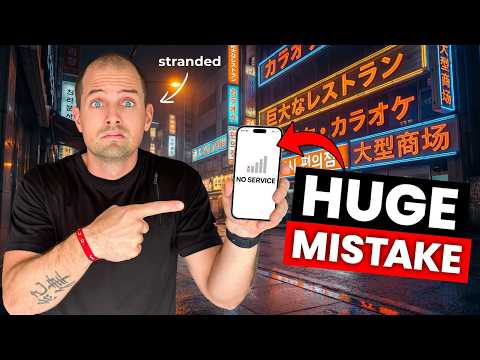
Common Activation Hiccups and How to Resolve Them
Delayed activation often stems from a weak or unstable Wi-Fi connection during the initial profile download; switch to a stronger network or restart the device to trigger the process. If the eSIM shows “No Service,” ensure the prepaid eSIM activation fix involves manually selecting the correct mobile network in your device settings, as automatic selection may fail. Profile corruption or duplicate entries can also cause errors—delete all eSIM profiles and re-scan the QR code or re-enter the activation code precisely. Finally, a missing APN configuration blocks data; enter the provider’s exact APN details in your network settings.
- Weak Wi-Fi during download: switch to a stable network or restart phone.
- Automatic network selection fails: manually pick the provider’s network in settings.
- Corrupted or duplicate profile: delete all eSIMs and re-scan the activation code.
- Missing APN settings: manually input the correct APN from the provider.
Cost Efficiency of No-Commitment Mobile Plans Across Borders
Prepaid eSIMs offer cost efficiency for cross-border travel by eliminating long-term contracts and roaming fees, allowing users to pay only for specific plans in each destination. This no-commitment model avoids the monthly overhead of a domestic plan when abroad, as you simply purchase a local or regional eSIM data package for the exact duration of your stay. The direct pricing per gigabyte on these plans is often lower than standard international roaming rates, and you avoid activation or early termination charges. For frequent border-hoppers, this modular approach can actually increase total expenditure if multiple short-term plans are purchased separately instead of a single regional package. Prepaid eSIMs enable precise budget control, as you pay upfront without hidden fees, though cost efficiency ultimately depends on matching plan scope to your actual travel pattern.
Comparing Per-Gigabyte Rates for Short-Term vs Extended Use
Comparing per-gigabyte rates for short-term vs extended use reveals a sharp cost divide. A 7-day, 1GB plan might price data at $10 per GB, while a 30-day, 20GB plan for the same region drops to under $3 per GB. This happens because providers heavily discount bulk data for travelers staying longer, making short bursts premium. For a weekend trip, a 3GB plan at $12 is fine, but for a month-long stay, a 20GB plan at $55 slashes your effective rate. **Extended-use plans maximize per-gigabyte value** by rewarding commitment.
Q: Why are per-gigabyte rates cheaper for extended-use prepaid eSIMs?
A: Providers assume higher consumption over longer periods, so they spread fixed costs (network access, activation) across more data, lowering the effective GB price for users who commit to a longer validity.
Hidden Fees to Watch For in Refillable Data Packages
When purchasing prepaid eSIM refillable data packages, watch for expiration-based refill penalties that trigger hidden costs. Some providers impose a new top-up fee if your data allowance expires before you refill, effectively charging you twice for unused remaining data. Others levy a small reactivation fee if the plan goes inactive after a certain period. Additionally, high-rate automatic refill systems can drain your account without warning. Always verify whether a refill resets the expiry date only when adding a full-price package, or if partial refills incur a fee. Read the terms for any “inactivity fee” or “minimum refill” requirements to avoid unexpected charges on your no-commitment plan.
Device Compatibility Checks for Modern Connectivity
For prepaid eSIM, device compatibility checks for modern connectivity verify that your smartphone’s hardware supports eSIM profiles and the required LTE/5G bands for your destination. A common step is confirming your device is not carrier-locked, as locked phones often reject a third-party eSIM. Q: How do I check my prepaid eSIM compatibility? A: Navigate to your phone’s settings menu—look for “About Phone” or “Cellular” options to see if “Add eSIM” or “Add Cellular Plan” is present, and cross-reference your model number with the provider’s supported device list. Without this check, you risk buying an eSIM that cannot activate on a recent phone lacking the correct firmware or regional frequency support.
Identifying Which Smartphones Support eSIM Technology
To use a prepaid eSIM, you must first verify eSIM smartphone compatibility by checking your device’s IMEI or settings. Major manufacturers like Apple (iPhone XS and newer), Google (Pixel 3 and later), and Samsung (Galaxy S20 and above) support it, but regional variants differ—a US-model iPhone may work while a Chinese one might not. Access your phone’s “About Phone” section for an eSIM option; if absent, the hardware lacks support. Some budget phones, like the Moto G Power, omit it entirely. Cross-reference your model against the prepaid carrier’s compatibility list to avoid activation failures.
| Brand | Minimum Model for eSIM | Key Check |
|---|---|---|
| Apple | iPhone XS/XR or newer | Check Settings > Cellular > Add eSIM |
| Samsung | Galaxy S20 (excl. some regions) | Look for “eSIM IMEI” in About Phone |
| Pixel 3 or newer (except 3a) | Settings > Network > Mobile Network |

Unlocked vs Carrier-Locked Handsets: What Works Best
For prepaid eSIM, an unlocked handset is almost always the superior choice. A carrier-locked phone restricts your eSIM to the original provider’s network, blocking the flexibility to install a prepaid eSIM from a different operator. An unlocked device allows direct access to multiple prepaid eSIM plans, letting you compare local rates and coverage. Carrier-locked handsets create unnecessary compatibility friction with prepaid eSIM, often requiring a cumbersome unlock request. Q: What works best for prepaid eSIM—unlocked or carrier-locked? Unlocked handsets work best, as they avoid network restrictions entirely. A locked phone may work only if its carrier specifically supports the prepaid eSIM you intend to use, which is rarely guaranteed.
Managing Multiple Network Profiles on One Device
Juggling travel, work, and a personal line, I rely on prepaid eSIMs to store multiple network profiles directly on my device. With eSIMs, I switch between a local data plan in Tokyo and a home country number without swapping physical cards. My phone’s settings let me label each profile clearly—like “Work Data USA” or “Travel JP 30-Day”—so I never accidentally burn through the wrong allowance. The real trick is mastering dual-SIM logic: one profile for calls, another for heavy streaming, with the device automatically routing traffic. It’s less about managing numbers and more about choreographing your connectivity in real time. This way, a quick toggle in the menu keeps me online, whether I’m navigating a new city or joining a remote meeting from a taxi.
How to Juggle a Primary Line and a Temporary Data Plan
Juggling a primary line and a temporary data plan requires explicit profile management in your device settings. Designate your physical SIM or home eSIM as the default for voice and SMS, while assigning the prepaid eSIM solely for cellular data. Activate “Allow Cellular Data Switching” to let the device automatically use the prepaid eSIM when the primary data signal is weak, preventing costly roaming charges. Prioritize data-only eSIM configuration by turning off “Line for iMessage & FaceTime” on the primary SIM to avoid billing confusion. Test call forwarding from your primary number to a VoIP app over the prepaid data plan for full reachability without dual-line charges.
Q: Can I use my primary number for calls while the temporary eSIM handles all data?
A: Yes, set the primary line as the default for voice, then manually Singapore eSIM select the temporary eSIM under “Cellular Data.” Your device will route calls over the primary line and data over the eSIM seamlessly, provided your primary carrier supports VoLTE during data roaming.
Best Practices for Switching Between Active Subscriptions
To switch between active prepaid eSIM subscriptions efficiently, always label your profiles clearly (e.g., “Travel Data UK” or “Home Backup”). Prioritize your active line by setting a default for voice and data, but manually disable the unused profile in the device’s cellular settings before activating the new one. This prevents billing disputes or dual-download conflicts. A clear sequence for a safe swap is:
- Turn off the active profile’s data roaming.
- Disable the current subscription line.
- Enable the new eSIM profile.
- Confirm the signal handoff under network selection.
Avoid switching during critical transactions (e.g., OTP requests) until both profiles stabilize.
Security and Privacy Benefits of Short-Term Digital Roaming
Short-term prepaid eSIM roaming fundamentally enhances your security by creating a disposable digital footprint. Since the connection is temporary and lacks a long-term contract, you avoid linking persistent location data to your primary identity, drastically reducing profiling risks. Payment occurs without exposing your main billing details, and the eSIM profile automatically self-destructs upon expiration. This means a malicious actor cannot exploit a stale digital key, as the network entry point literally evaporates. Unlike a physical SIM, which can be cloned or tracked across continents, a short-term eSIM offers true ephemeral connectivity, shielding your device’s IMSI when hopping between local towers. You gain practical privacy because each trip becomes a clean slate, with no cached history for advertisers or trackers to monetize.
Why Temporary Numbers Reduce Spam and Identity Risks
Using a temporary number from a prepaid eSIM acts as a disposable identity layer, severing the link between your primary contact data and ephemeral roaming activities. Since the number is designed for short-term travel, marketers and data brokers cannot attach it to your long-term digital profile, drastically reducing spam calls and messages. This isolation prevents credential stuffing attacks or SIM-swap fraud, as the number expires before a threat actor can leverage it. The transient phone number lifecycle ensures that any leaked data becomes worthless after your trip ends.
- Burner numbers prevent your permanent line from being harvested by insecure local sign-up forms.
- Expired numbers cannot receive verification SMS for account takeover attempts.
- No persistent link to social media or banking accounts means compromised data goes stale.
- Automated spam dialers waste resources targeting a number that stops working within days.
Encryption Standards in Latest Virtual SIM Offerings
Latest virtual SIM offerings in prepaid eSIMs now mandate end-to-end AES-256 encryption for all data transmitted between the device and the roaming partner’s core network, ensuring session-level confidentiality. These standards isolate user traffic via ephemeral key exchanges, preventing interception during handoffs between local towers. Unlike older roaming protocols, current virtual SIMs negotiate fresh encryption keys per session, thwarting replay attacks without user intervention. Q: How do these encryption standards differ from traditional SIM roaming? A: They apply symmetric encryption directly to the digital profile’s signaling traffic, whereas physical SIMs often rely on less transparent operator-side ciphering, leaving gaps in user-layer protection.

What Is a Prepaid eSIM and How Does It Work
Understanding the difference between a physical SIM and an embedded SIM
How activation happens without a plastic card
Which devices support this technology
Key Features That Make Prepaid eSIM Stand Out
Instant setup and activation from anywhere
Multiple profiles on a single device
No roaming fees for international travel
How to Pick the Right Prepaid eSIM Plan
Matching data allowances to your usage habits
Checking coverage and network operators included
Comparing validity periods and top-up options